
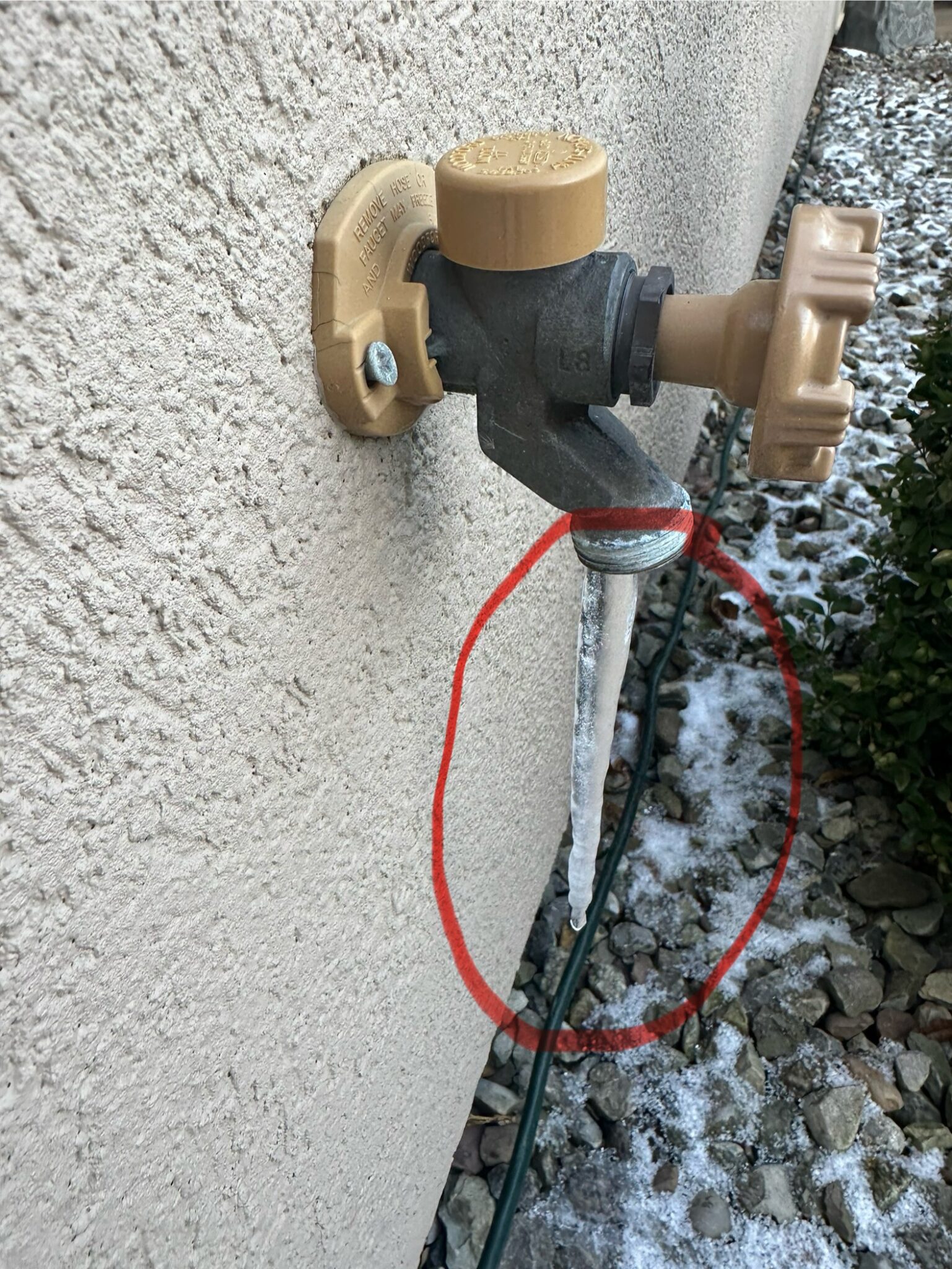
Even though it’s called a freeze-proof faucet, a freeze-proof spigot icicle can still form when water becomes trapped inside the line. During a recent Home Watch USA inspection, I found exactly that — an icicle hanging from a freeze-proof spigot.
So how does this happen? And more importantly… what does it mean for your home?
Let’s break it down.
What “Freeze-Proof” Actually Means
A freeze-proof spigot (also called a frost-free faucet or frost-proof hydrant) is designed so the shut-off valve sits inside the warm part of the home, not outside where temperatures drop below freezing. When the water is turned off, the exterior portion is supposed to drain completely so the pipe won’t freeze.
However, “freeze-proof” does not mean “freeze-proof in every situation.”
Even a small amount of trapped water can freeze under the right conditions.
Why an Icicle Formed — Even With No Hose Attached
1. Improper Pitch (Most Common Cause)
For the faucet to drain properly, the interior pipe must slope downward toward the outside.
If the spigot was installed level or pitched the wrong way, a small amount of water stays inside the barrel.
When temperatures drop, that water freezes ? expands ? pushes outward ? forms an icicle.
This is extremely common in older homes, additions, and DIY installations.
2. A Tiny Internal Drip
Even when the handle is turned off fully, the internal valve inside the wall may not be sealing 100%.
A slow internal drip can allow:
-
a few drops of water
-
to travel down the spigot
-
freeze at the tip
-
and build into an icicle
This is often the first sign a spigot needs service or replacement.
3. Residual Water That Didn’t Drain Fully
Freeze-proof faucets drain themselves only when conditions are perfect:
-
correct pitch
-
clean interior barrel
-
no mineral buildup
-
no recent use before a freeze
If just a tablespoon of water remains inside, that’s enough to freeze and create an icicle.
Why You Shouldn’t Ignore This
An icicle on a freeze-proof faucet is more than a cosmetic issue.
Ice inside the faucet barrel can:
-
crack the pipe inside the wall
-
burst the line when temperatures rise
-
cause slow leaks that go unnoticed for weeks
-
lead to interior water damage or mold
Often, the leak doesn’t appear until the ice thaws.
This is exactly the kind of early indicator Home Watch services are meant to catch.
What Homeowners Should Do
If you see an icicle forming on an outdoor spigot:
-
Don’t use the faucet until it warms up.
-
Check inside the home (basement or utility room) for any signs of moisture.
-
Monitor it during warmer temps — drips appear when ice melts.
-
Consider having a plumber inspect the pitch and internal valve if it happens repeatedly.
How Home Watch USA Helps Protect Your Home
Vacant homes face unique cold-weather risks that can go unnoticed for days or weeks.
During our routine Home Watch inspections, we look for subtle warning signs — like this icicle — that could indicate freezing, leaks, or future failures.
Catching issues early prevents the much bigger headaches homeowners face in winter.
If you’re leaving your home vacant, heading south, or managing a second property, we’re here to give you peace of mind.
Home Watch USA
Professional. Reliable. Watching Your Home When You Can’t.
Rochester, NY
(585) 704-8324
HomeWatchUSA.com
Freeze-Proof Spigot Icicle FAQ
Q: Why did my freeze-proof spigot freeze and form an icicle?
A: A freeze-proof spigot can still freeze if water becomes trapped inside the faucet barrel, if the pipe isn’t sloped correctly, or if there’s a small internal drip. Even without a hose attached, trapped water can freeze and form an icicle on the outdoor faucet.
Q: Is an icicle on a freeze-proof spigot dangerous?
A: Yes — it may indicate ice inside the faucet tube. As ice expands, it can crack the pipe inside the wall. Leaks often appear later when the ice melts. This is an important winter plumbing warning sign for vacant homes.
Q: How do I prevent my freeze-proof faucet from freezing?
A: Make sure the spigot is pitched downward toward the outside, fully shut off, and free of dripping. Disconnect all attachments during cold weather. If icicles form repeatedly, a plumber should inspect the faucet for pitch and valve issues.
Q: Why do freeze-proof faucets freeze even when no hose is connected?
A: This usually means water didn’t drain completely. Causes include improper pitch, mineral buildup, internal valve seepage, or recent use before freezing temperatures.
Q: Should I call a professional if my spigot forms an icicle?
A: It is always advisable to consult a licensed plumber if you notice freezing at a freeze-proof spigot. If it happens once, monitor the area closely for leaks as temperatures rise. If it occurs more than once, a plumber should evaluate the faucet’s pitch, internal valve, and drainage. Home Watch USA routinely identifies issues like this during winter inspections, helping prevent damage while your home is vacant.